- Tours
- Attractions
- Travel guides
Popular searches
- 热搜词
- Destinations

The original Chinese guide begins with a common question: can an international visitor come to Tibet alone? A person travelling without friends may still be able to join an organised small group or arrange a private itinerary. Travelling solo and travelling independently are different arrangements. Before booking transport, ask a qualified travel operator to confirm the current entry requirements for your nationality, documents and proposed route.
The source guide discusses the Tibet Travel Permit and the role of a qualified agency in arranging it. Requirements, supporting documents, processing times and access rules can change. Do not use an old article as evidence that a permit will be issued or that a particular itinerary is open. Ask the operator what is required for your passport or travel document, visa or other entry status, arrival point and intended dates.
Prepare clear copies of the requested documents, check names and document numbers carefully, and agree on the route before an application is submitted. Ask how the permit will reach you and what form of document your airline or rail operator needs. Obtain confirmation for your actual journey rather than relying on a general rule quoted online.
A shared departure spreads guide and vehicle costs among travellers. Ask about the confirmed departure date, group size, guide language, room arrangements, cancellation terms and what happens if the minimum group size is not reached. A private trip can offer more control over the schedule, but its fixed costs are shared by fewer people. Request a written quotation and a clear list of inclusions.
An attraction appearing on this website does not establish that it is open to every visitor. Access to border areas and other locations may require additional arrangements or may be restricted. Have the operator check each overnight stop, sightseeing stop and road section. Avoid paying for a route on the assumption that a nearby viewpoint is automatically accessible.
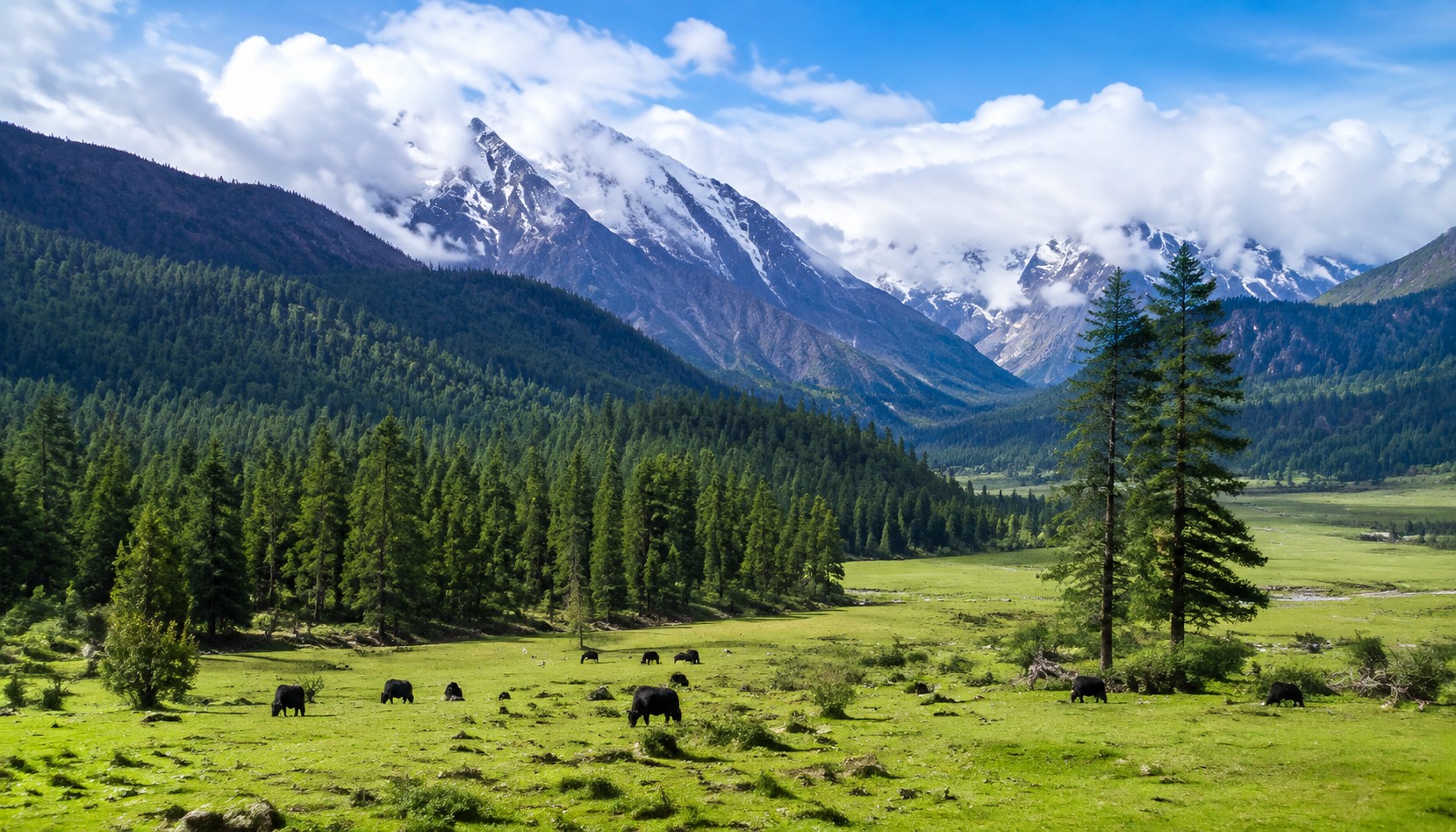
The source article combines time in Lhasa with landscapes in the Nyingchi and Shigatse regions. Its city stops include the Potala Palace, Jokhang Temple and Barkhor. Elsewhere it mentions Basum Tso, Lulang, Yamdrok Lake, Karola Glacier and Tashilhunpo Monastery. These are ideas to discuss, not a confirmed package or a guarantee of access.
Allow realistic travel time between regions and avoid adding distant places simply to increase the number of stops. Everest and western Tibet require separate planning; they should not be treated as a casual last-minute extension. Ask the operator to explain the distances, overnight stops and available contingency time.
Much of Tibet is at high elevation. Discuss your individual travel plans with a qualified healthcare professional before departure. Ask your operator about emergency procedures and suitable insurance. The original article contains specific health suggestions; this English edition does not present those suggestions as personalised medical advice.
Ask before photographing people, especially during religious practice. Follow the directions posted inside temples and the guidance of staff. Keep a respectful distance from worshippers and do not touch people or sacred objects without permission. Bring suitable clothing for changing temperatures and plan practical breaks during the day.
Confirm the operator's qualifications, the language of the guide, the document arrangements, the exact itinerary, accommodation, transport, admissions and insurance. Ask which costs are included, which are optional, how changes are handled, and who to contact during the journey.
This is an adapted English edition of the site's original Chinese planning guide. It does not offer a live tour price, guarantee a permit or replace current official requirements. Get the arrangements for your own trip confirmed before booking.